
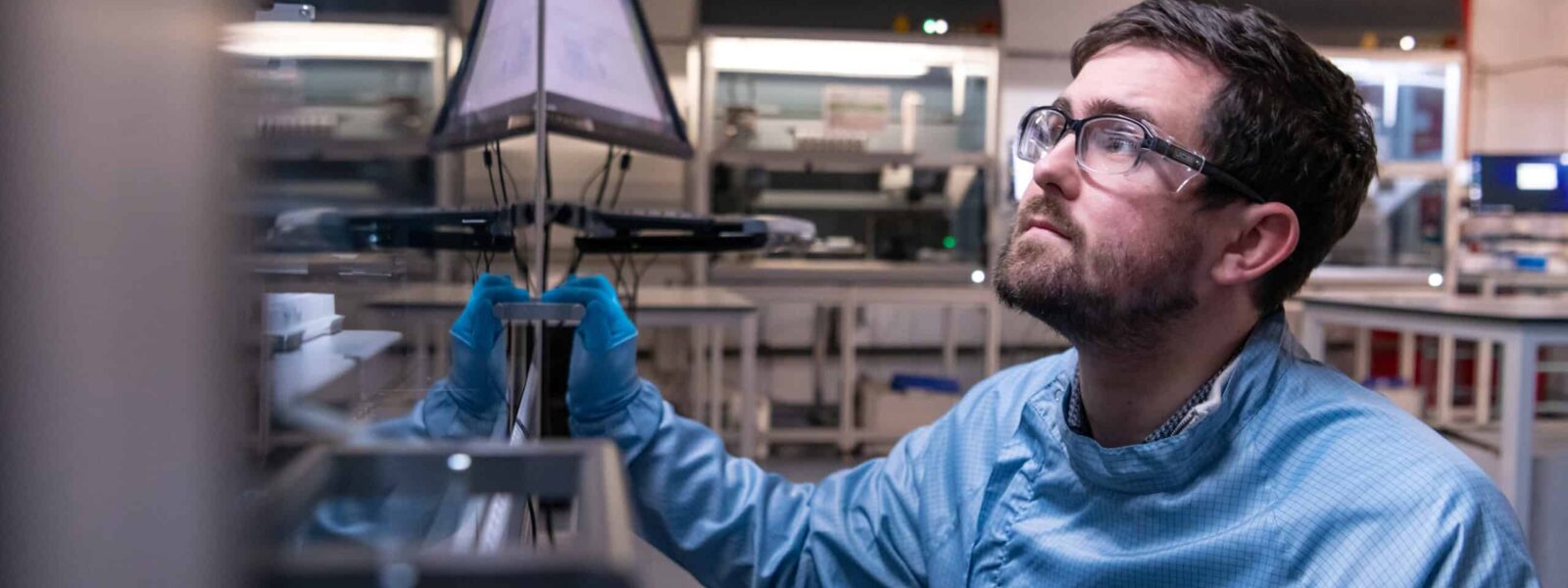
Find out about the types of samples UK Biobank holds, how they are stored, and some of the exciting work being done with them.
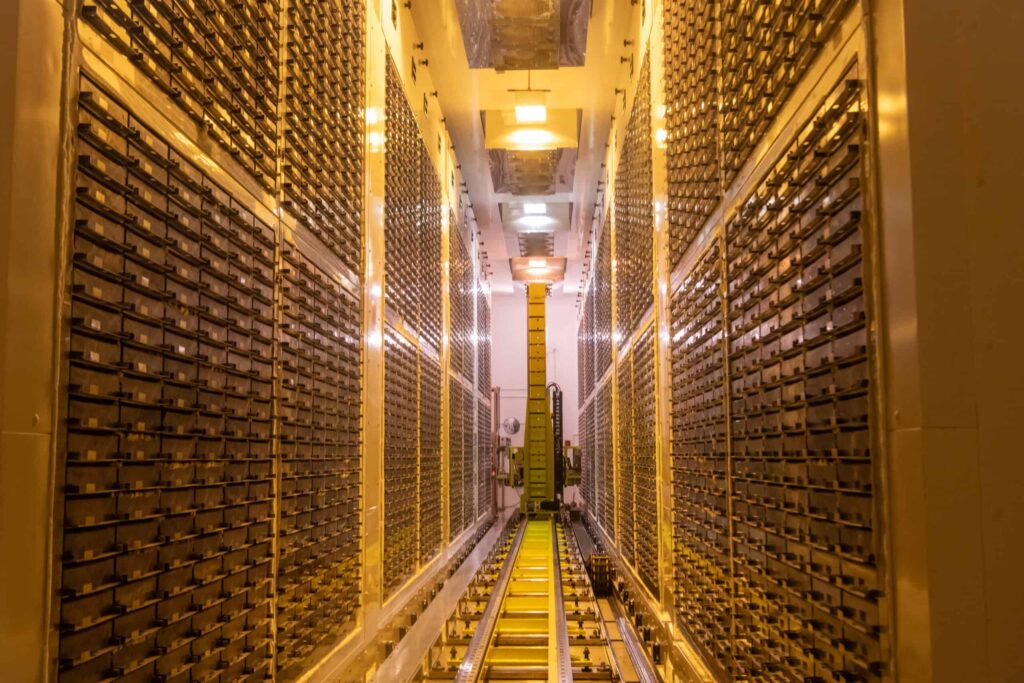
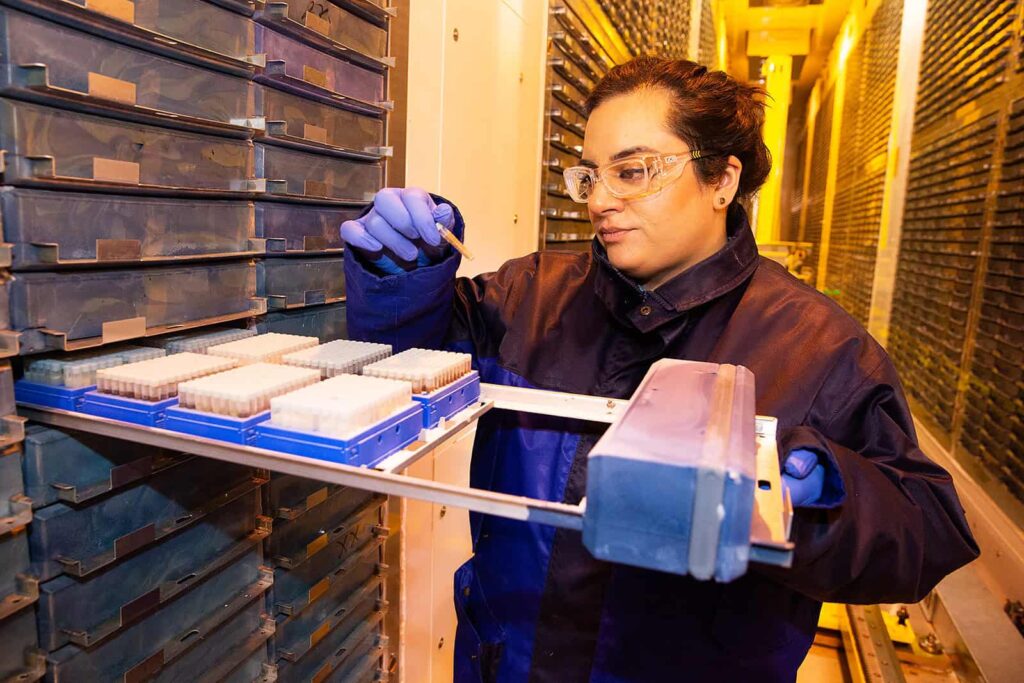
UK Biobank holds around 17 million containers with blood, urine and saliva samples. Around 11 million samples are stored at our main laboratory in Stockport, with 10 million stored in our automated –80°C freezer. The freezer is big enough to park two double-decker buses inside of it. It contains an industrial robot running on a track whose arm can pull out around 250,000 samples a year for later analysis.
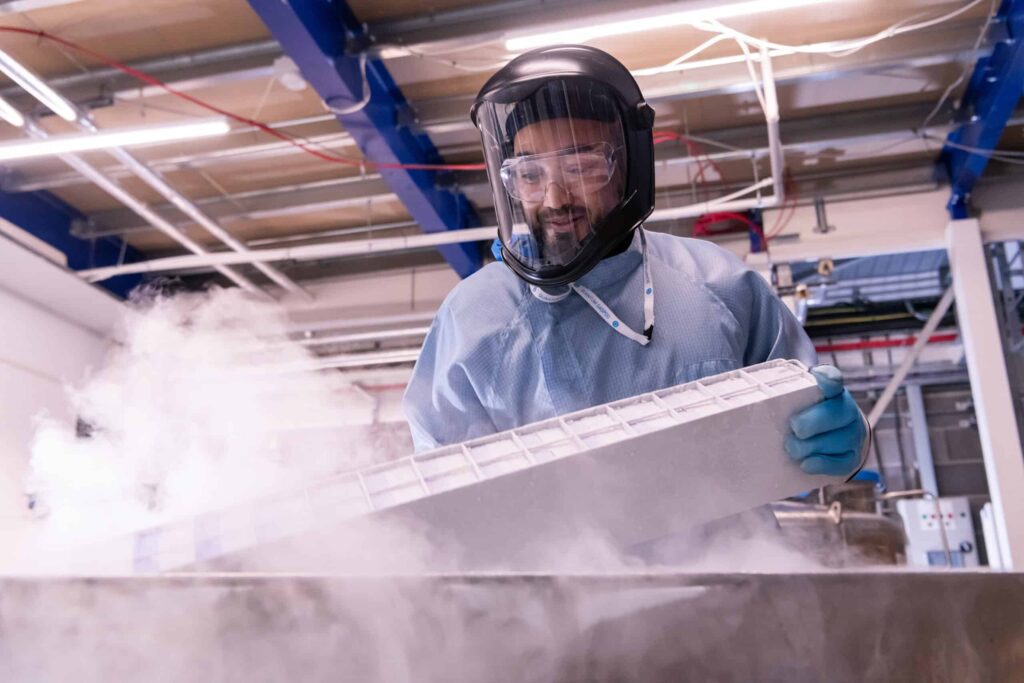
We have around 6 million copies of our primary samples – dedicated ‘backup’ samples – stored at a separate facility in the south of England. They are kept in tanks filled with liquid nitrogen at –196°C.

17 million containers with blood, urine, and saliva samples held
Types of samples
Blood samples
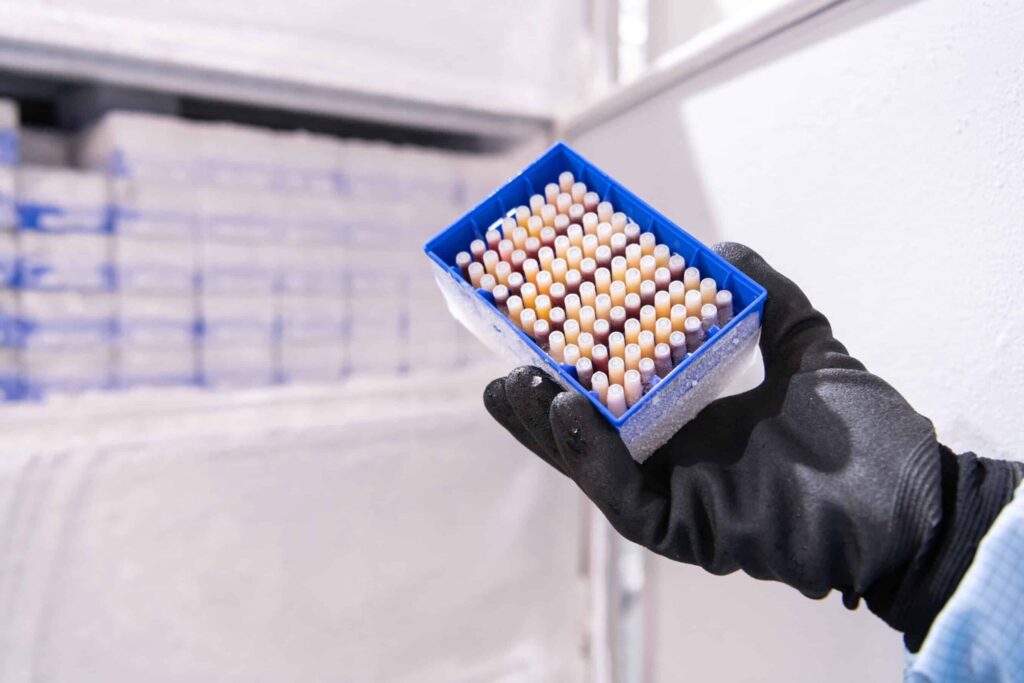
We collected around 50ml (approximately three tablespoons) of blood from all 500,000 UK Biobank participants during their first ‘baseline’ visit to one of our centres, between 2006 and 2010. Additional samples were collected from participants who attended a repeat assessment, or our imaging assessments.
Each participant’s blood sample was separated into different tubes. The tubes contain different chemicals to prepare specific blood components for later analysis.
The material that has proven most popular for research projects is the ‘buffy coat’ (so called because of its buff – brownish yellow – colour). It comes from blood that has been prevented from clotting and contains mostly white blood cells and platelets. The buffy coat was used to analyse the complete DNA sequence of each participant.
Urine samples
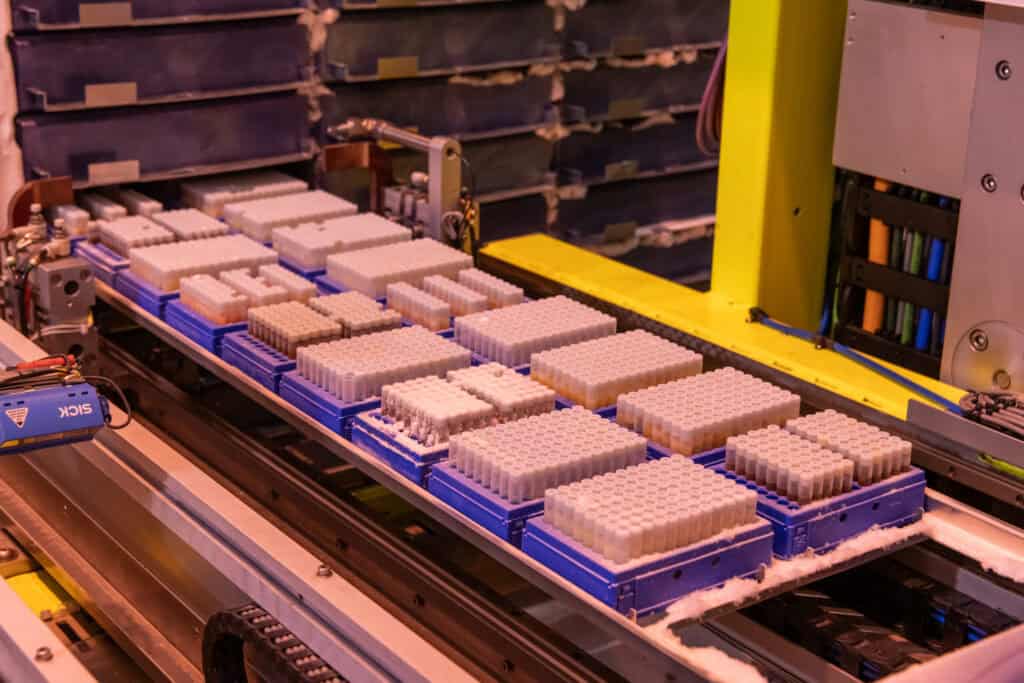
We collected urine samples from all 500,000 UK Biobank participants during their baseline visit. Additional samples were collected from participants who attended a repeat baseline, imaging or repeat imaging visit.
So far, urine samples have been analysed for the amounts of biochemicals such as creatinine – an indicator for kidney function – or glucose, which helps to diagnose diabetes.
Saliva samples
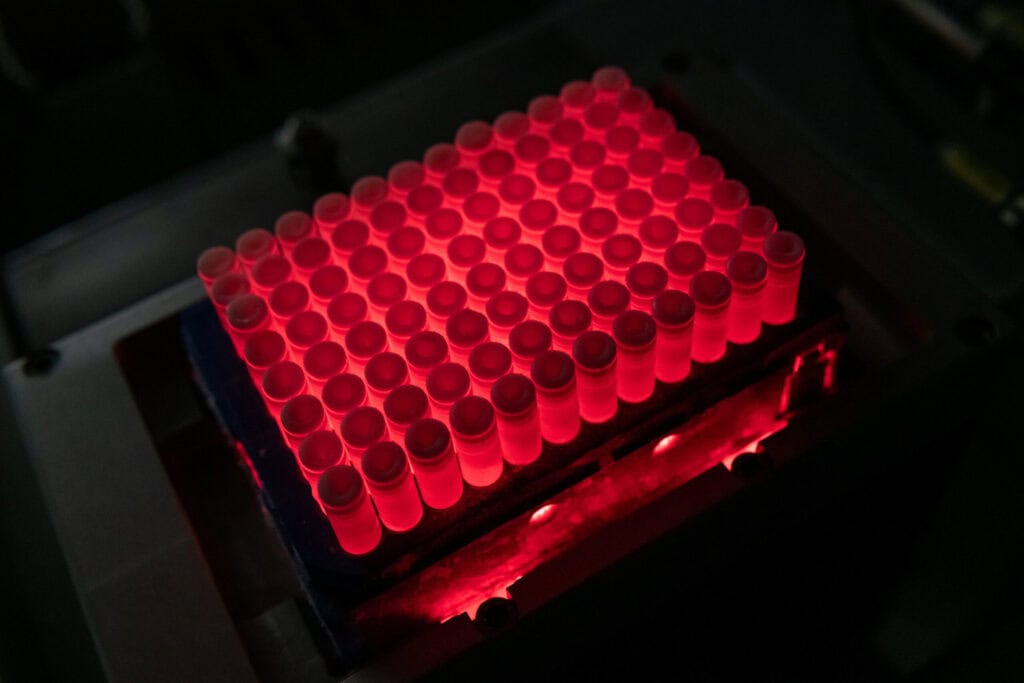
We also collected saliva samples from around 120,000 participants at recruitment.
So far, no research projects have used these samples, because saliva’s sticky texture can make it tricky to work with. New processes could eventually reveal insights such as how the communities of microorganisms that live in our mouths influence our health.
How samples unlock discoveries
Since we opened access to our participants’ samples in 2012, research projects have analysed millions of samples and generated data that is in turn used by thousands of scientists. Each sample project only uses a tiny amount of material, so more than 90% of sample material remains unused. As processes improve, projects tend to use less and less material.
The aim of any research project that uses our participants’ samples is to turn this depletable biological material into high-quality, non-depletable information. This information then becomes part of UK Biobank for other researchers to explore. For example, analysis of participants’ blood plasma yielded information about blood proteins, which has been used to detect dementia 15 years before diagnosis.
If you are a participant, find out more about how your samples have been used in health research.

Millions of samples have been analysed since 2012
Our samples’ future
In 2026, more than 11 million of our participants’ samples will be moved to UK Biobank’s brand-new headquarters in Manchester.
The facility will include four latest-generation automated freezers that have room for up to 20 million samples in total – twice as many as we currently hold. New freezer robots will be able to retrieve samples four times faster, around 1 million samples a year.
The building will be one of the first lab spaces in the UK to be 100% electric and net zero carbon in its construction and the operation in its shared spaces.
Sample access for researchers
Our capacity to deliver samples for research projects will remain limited for the next few years while we are replacing our laboratory infrastructure.
From 2027, our capacity will be significantly increased.
“This is the global flagship project for open science. I cannot think of a more pragmatic way to learn insights from the health of half a million people than having access to UK Biobank. We’ve probably yet to unlock the really important needles from this particular haystack.”
Professor Aiden Doherty, University of Oxford
What samples were collected?
| Sample type | Baseline collected 2006-2010 | Repeat assessment (20k) collected 2012-2013 | Imaging (100k) collected 2014-present | Repeat imaging (up to 60k) collected 2014-present |
|---|---|---|---|---|
| Blood: Haematology EDTA plasma Buffy coat Red cells Lithium heparin Plasma-separating Acid citric dextrose Tempus RNA DNA | ✓ ✓ ✓ ✓ ✓ ✓ ✓ 120,000 ✓ | ✓ ✓ ✓ ✓ ✓ ✓ ✓ ✓ ✓ | ✓ ✓ ✓ ✓ ✓ | ✓ ✓ ✓ ✓ ✓ |
| Urine | ✓ | ✓ | ✓ | ✓ |
| Saliva | 120,000 | ✓ |
