
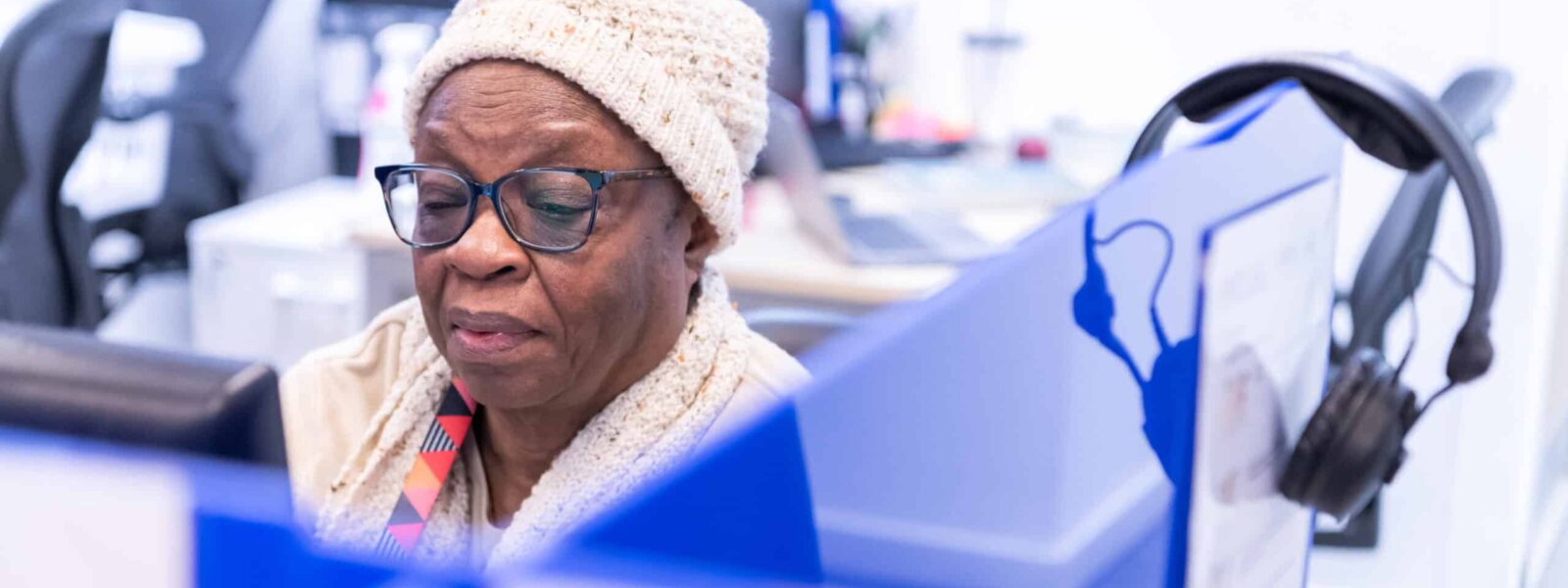
When participants first visited one of our centres between 2006 and 2010, they answered questions on a touchscreen and spoke to a study nurse.
This information helps researchers to better understand how participants’ personal histories and life circumstances contribute to health conditions.
Sociodemographic data
Participants’ reports of their ethnicity, education, employment and household information.
-
 Current availability
- 500,000 participants
- Repeat measures were taken for 20,000 participants who attended a second baseline assessment, as well as for 100,000 participants who attended an imaging assessment

Health and medical history
Participants’ reports of their medical conditions, medications, operations, cancer screening, pain, oral health, eyesight, hearing and general health.
-
Current availability
- 500,000 participants
- Repeat measures were taken for 20,000 participants who attended a second baseline assessment, as well as for 100,000 participants who attended an imaging assessment
Lifestyle
Participants’ reports of their smoking habits and alcohol consumption, physical activity, diet, sleep, electronic device use, sun exposure and sexual factors.
-
Current availability
- 500,000 participants
- Repeat measures were taken for 20,000 participants who attended a second baseline assessment, as well as for 100,000 participants who attended an imaging assessment
Early life and family history
Participants’ reports of early-life factors, such as birthplace and birth weight, as well as participants’ family structure and their closest relatives’ illnesses.
-
Current availability
- 500,000 participants
- Repeat measures were taken for 20,000 participants who attended a second baseline assessment, as well as for 100,000 participants who attended an imaging assessment
Psychosocial factors
Participants’ reports of their social support, history of bipolar/major depression, anxiety, nerves, psychological traits and mood.
-
Current availability
- 500,000 participants
- Repeat measures were taken for 20,000 participants who attended a second baseline assessment, as well as for 100,000 participants who attended an imaging assessment
Access UK Biobank demographic and lifestyle data
Researchers can explore all demographic and lifestyle data on our data browser, Showcase.
Demographic, lifestyle and self-reported health data research stories
Read a selection of stories about how healthcare is being changed by discoveries made with demographic, lifestyle and self-reported data.
First-of-its-kind study of more than 200 UK Biobank participants’ scans could help doctors to spot early heart failure in type 2 diabetes patients.

Activity monitor data from more than 25,000 UK Biobank participants reveals the potential benefits of activity bursts in those who are normally inactive.

Tiny airborne particles cause inflammation in the lungs, which can turn harmless mutated cells into cancerous tumours.
A method that predicts someone’s risk of tears in the body’s largest blood vessel could avoid a condition that is rarely discovered early enough.
Explore our other data categories

Magnetic resonance images, bone-density scans, carotid artery ultrasound and more

Proteins, metabolites, infectious disease markers and other biomarkers

Genotyping, exome and whole-genome information

Linked electronic medical records, including hospital stays, cancer diagnoses and causes of death

Participants’ information on health and lifestyle collected via online or touchscreen questionnaires

Baseline data from physical exams, vision and hearing tests, activity monitor and more

Derived data on participants’ environment, such as local air and noise pollution