
UK Biobank is the world’s largest health imaging study. The images we collect from our participants allow researchers to investigate on an unprecedented scale how people’s genetics and lifestyle influence the structure and function of internal organs.
By combining imaging data with existing genetic and lifestyle data from our participants, scientists can identify the genetic variants associated with any changes, enabling earlier diagnoses and targeted treatments of diseases.
Thanks to the UK Biobank Repeat Imaging Project, researchers can explore how the body has changed over time, helping to understand how diseases of mid-to-later life develop.
Imaging data at a glance
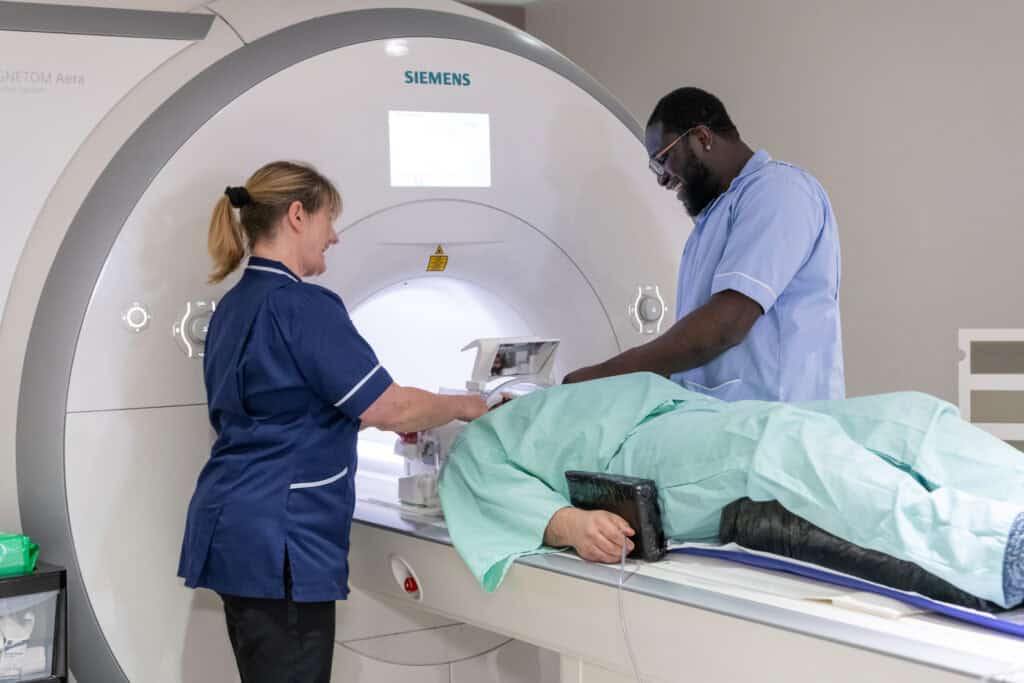
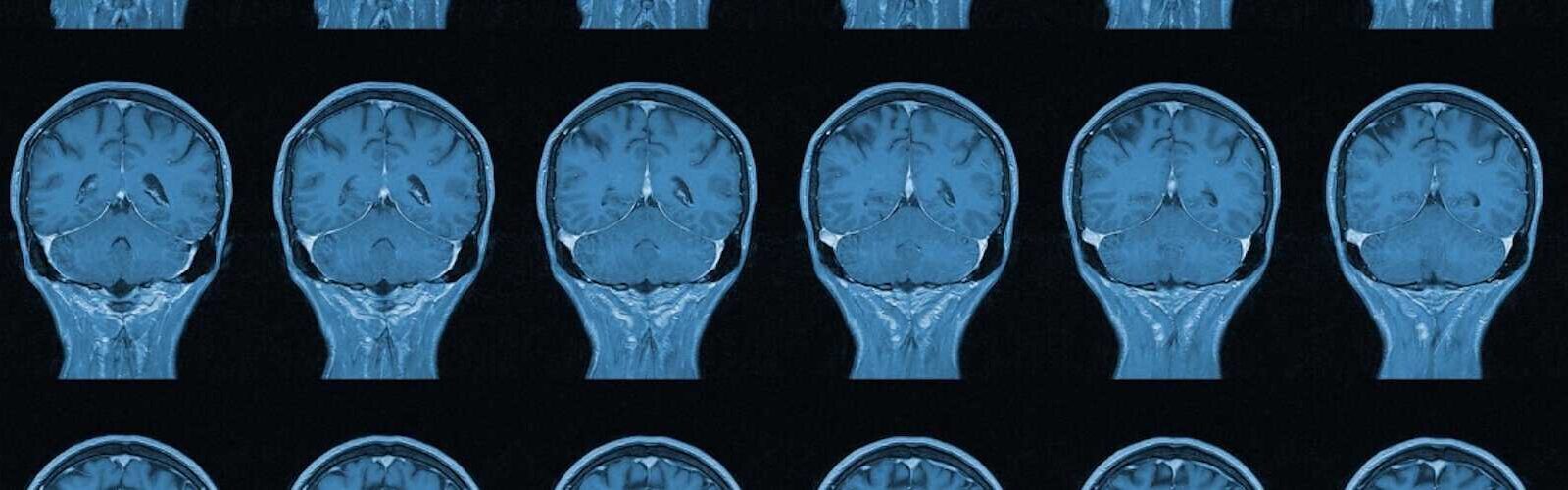
Magnetic resonance imaging (MRI)
An MRI scanner creates images of the brain, heart and abdomen.
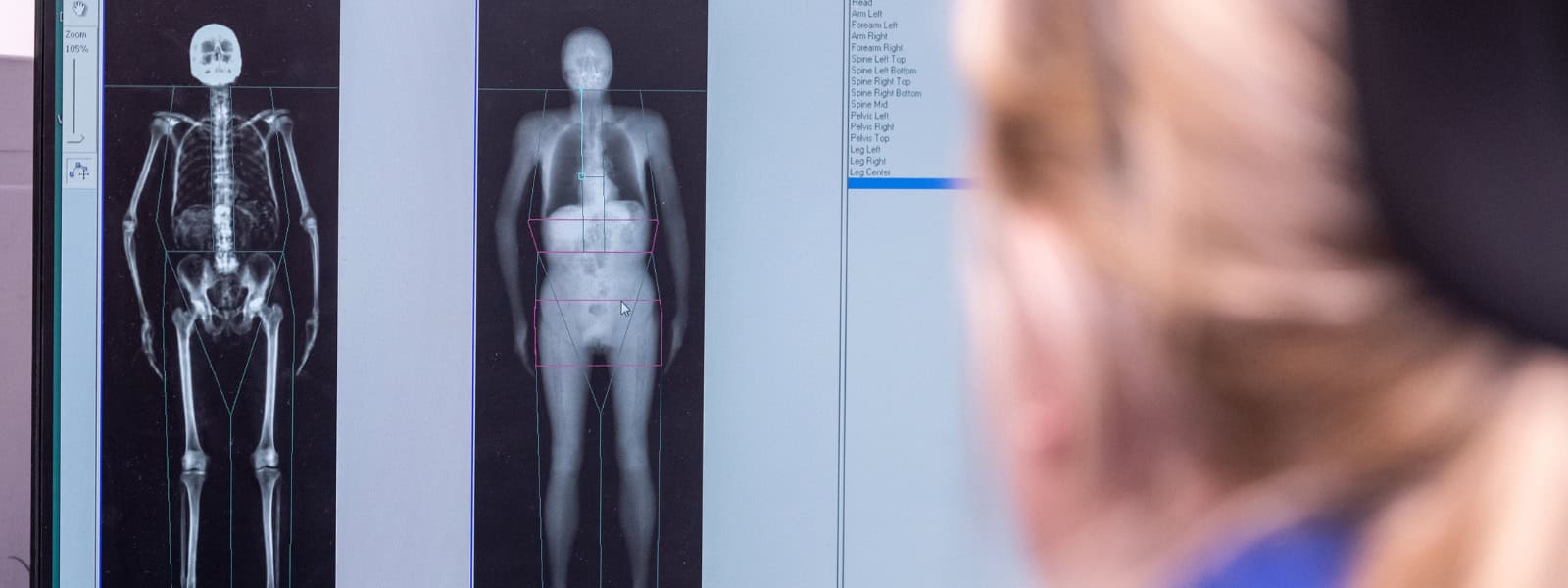
Bone density scans (DXA/DEXA)
Low-dose x-rays are used to image calcium and other minerals in the bones.
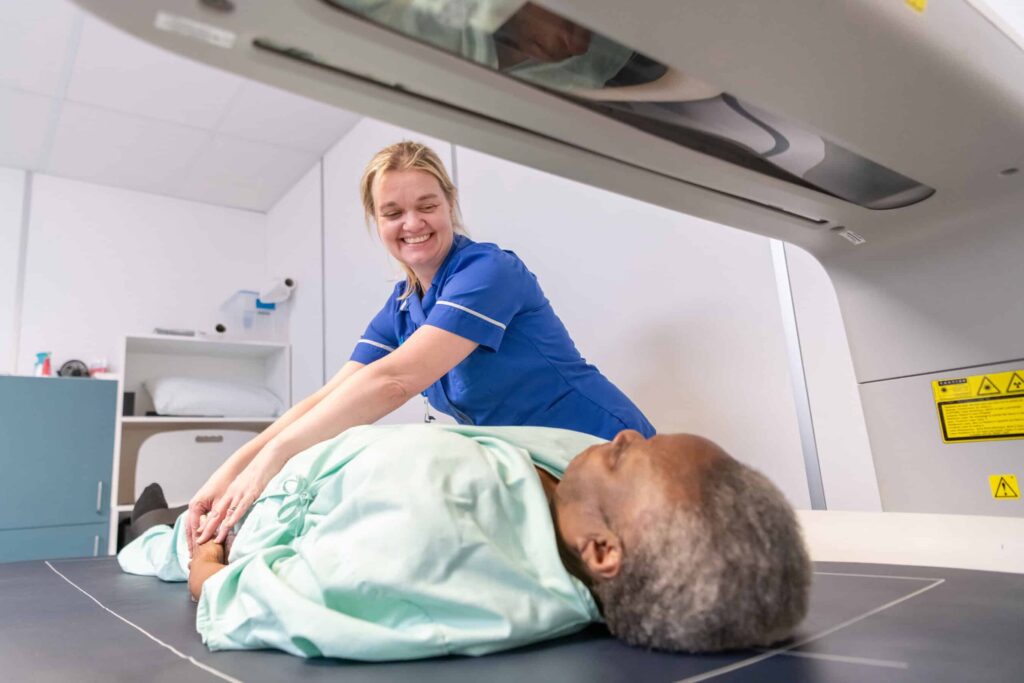
Carotid artery ultrasound
High-frequency sound waves are used to image blood flow through the large blood vessels on the side of the neck.

-
 Current availability
- 90,000 participants
- 3,000 participants with repeat images (collected within two years of the first set)
-
 Future availability
- 100,000 participants
- Repeat imaging of 60,000 participants has started


Retina scans (Optical Coherence Tomography, OCT)
Light is used to create images of the retina in the back of the eye.
-
 Current availability
- 100,000 participants

COVID-19 repeat scans
A subgroup of participants, who had already taken part in earlier imaging, were re-invited during the pandemic to undergo MRI, DXA and ultrasound scans.
-
Current availability
- 2,000 participants
Incidental findings
Participants don’t receive results from the imaging study. If there are indications for a potentially life-threatening health condition identified from the imaging scans, we will get in touch with the participant and their GP.
Access UK Biobank imaging data
Researchers can explore all imaging data on our data browser, Showcase.
Imaging data research stories
Read a selection of stories about how healthcare is being changed by discoveries made with imaging data.

Researchers claim that people who live near major airports have poorer cardiac function so stricter noise limits for planes are urgently needed.
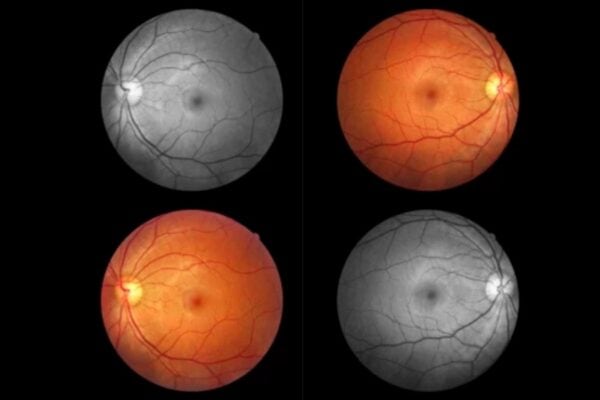
Analysis of the ‘fingerprint’ of blood vessels in the retina could make it possible for people to keep tabs on their cardiovascular health during routine eye tests.
First-of-its-kind study of more than 200 UK Biobank participants’ scans could help doctors to spot early heart failure in type 2 diabetes patients.
An automated algorithm that assesses heart-surrounding fat and predicts heart failure could one day help clinicians to better support patients.
Explore our other data categories

Proteins, metabolites, infectious disease markers and other biomarkers

Genotyping, exome and whole-genome information

Linked electronic medical records, including hospital stays, cancer diagnoses and causes of death

Participants’ information on health and lifestyle collected via online or touchscreen questionnaires

Baseline data from physical exams, vision and hearing tests, activity monitor and more

Participants’ self-reported data on health and lifestyle

Derived data on participants’ environment, such as local air and noise pollution
“Most large studies typically scan just a single body part of a few thousand people, so this project is truly unique…not only are we working on a vastly bigger scale, but we record images of multiple parts of each person’s body, so you can study the whole person and see how it all relates.”
Professor Sir Rory Collins, Chief Executive and Principal Investigator of UK Biobank