
Take a look at how researchers are using your data to make discoveries which are changing healthcare for the better in our selection of research stories.
Childhood sweet tooth linked to diabetes in middle age

Children who grew up eating little sugar have a lower risk of type 2 diabetes and high blood pressure later in life. This is even true for babies whose pregnant mums ate a lower-sugar diet, health questionnaires and medical records from 60,000 UK Biobank participants born during post-war sugar rationing have revealed. The amount of sugar infants had when they started to eat solid foods seemed to make the biggest difference.
Study leader Tadeja Gracner from the University of Southern California, USA, hopes that her work will make baby food companies consider reducing the sugar content in their products.
Reference: Science, October 2024
Read the full research story below:

Data from 60,000 UK Biobank participants born around when sugar rationing ended suggest that restricting sugar during early years may have long-term benefits.
“The [World Health Organization] says that children below the age of two should actually not be consuming added sugar at all, but that is much easier to know than to comply with.”
Tadeja Gracner, study leader
New treatment for rare blood cancer after genetic link discovery
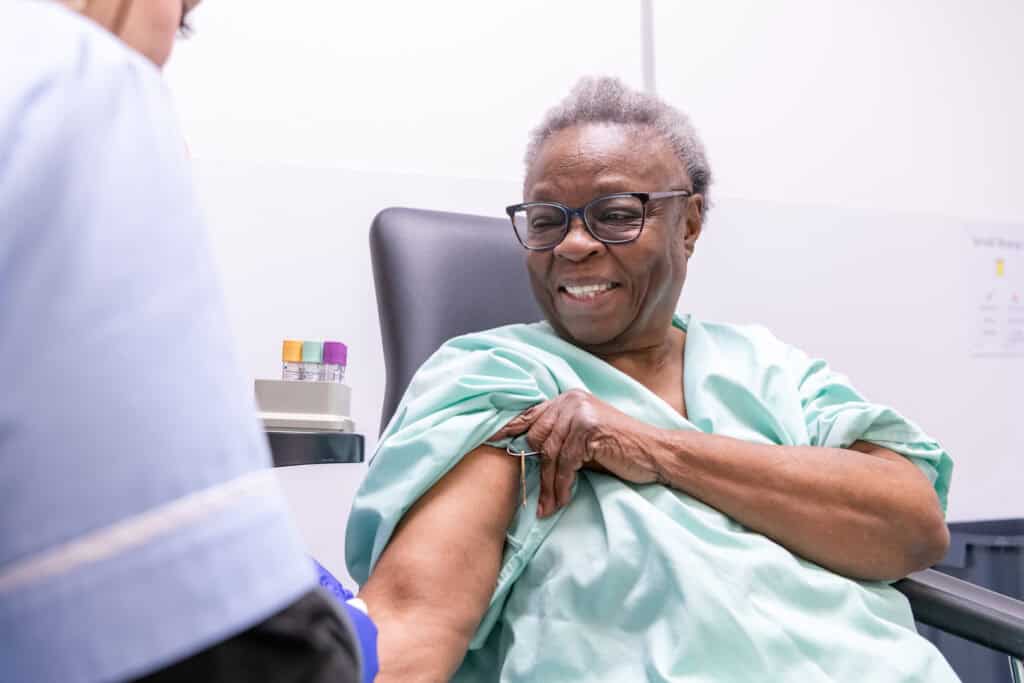
Genetic data from all 500,000 UK Biobank participants have revealed a link between a rare blood cancer and a genetic glitch that causes iron overload. This has led to the development of a drug that could replace the frequent blood withdrawals people with this condition have to undergo – an arduous process that can lead to chronic fatigue.
The condition, called polycythemia vera, leads to an overproduction of red blood cells, which puts people at high risk of heart attacks, strokes and blood clots. “It was amazing – this project went from concept to clinical trial in four years,” says the study’s co-leader, Cavan Bennett from the University of Melbourne in Australia.
Reference: Blood, March 2023
Read the full research story below:
Faulty gene in body’s iron regulation found to play a role in polycythemia vera, a rare blood cancer.
“It was amazing – this project went from concept to clinical trial in four years.”
Cavan Bennett, study leader
Blood analysis predicts dementia years before diagnosis
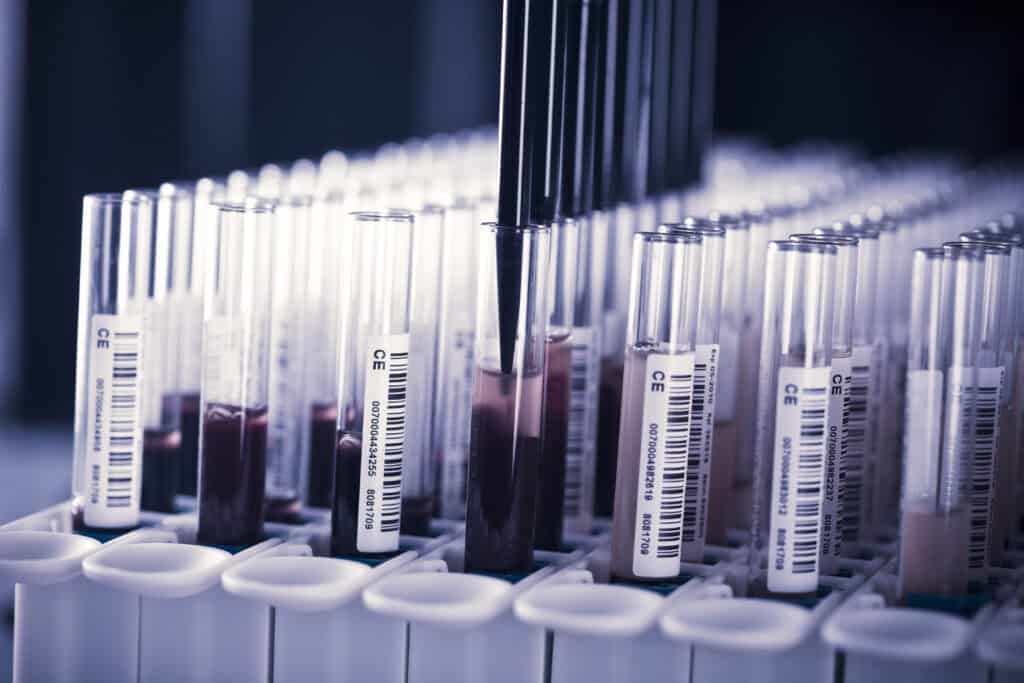
Four proteins found in blood could eventually reveal developing dementia long before someone starts noticing symptoms. Researchers examined thousands of proteins in the blood samples of more than 50,000 UK Biobank participants. Four of these biomolecules were present at higher levels in the blood of apparently healthy people who would later be diagnosed with dementia, including Alzheimer’s disease.
Early diagnosis and treatment are key to helping people live well with the condition. “We can quite reliably predict dementia 15 years before the diagnosis of the disease,” says the study’s co-leader, Jian-Feng Feng from China’s Fudan University. His team is now working on creating a simple and inexpensive test that could be used in clinics.
Reference: Nature Aging, February 2023
Read the full research story below:

Blood samples donated by more than 50,000 UK Biobank participants point to four biomolecules that can reveal developing dementia in apparently healthy people.
“We can quite reliably predict dementia 15 years before the diagnosis of the disease.”
Jian-Feng Feng, study leader
Genetic tests could create better depression treatment

DNA analysis of more than 5 million people, including 370,000 UK Biobank participants, has revealed almost 700 genetic differences in people with depression. The researchers eventually hope to uncover how this affects what antidepressant works for people. For this, the team also looked at GP records of 230,000 UK Biobank participants as well as more than 170,000 UK Biobank participants’ replies to an online mental health questionnaire.
“That’s really unique data, because it’s telling us not just what the doctor thinks, but what does that person with depression think about their treatment,” says the study’s co-leader, Cathryn Lewis from King’s College London, UK. Eventually, genetic testing could help doctors to match their patients with the right antidepressant.
References: Cell, January 2025; medRxiv preprint, October 2024; medRxiv preprint, November 2024
Read the full research story below:
World’s largest DNA analysis of people with depression reveals hundreds of inherited genetic differences, which could eventually help to match people with an antidepressant that works for them.
“That’s really unique data, because it’s telling us not just what the doctor thinks, but what does that person with depression think about their treatment.”
Cathryn Lewis, study co-leader
Next section: