
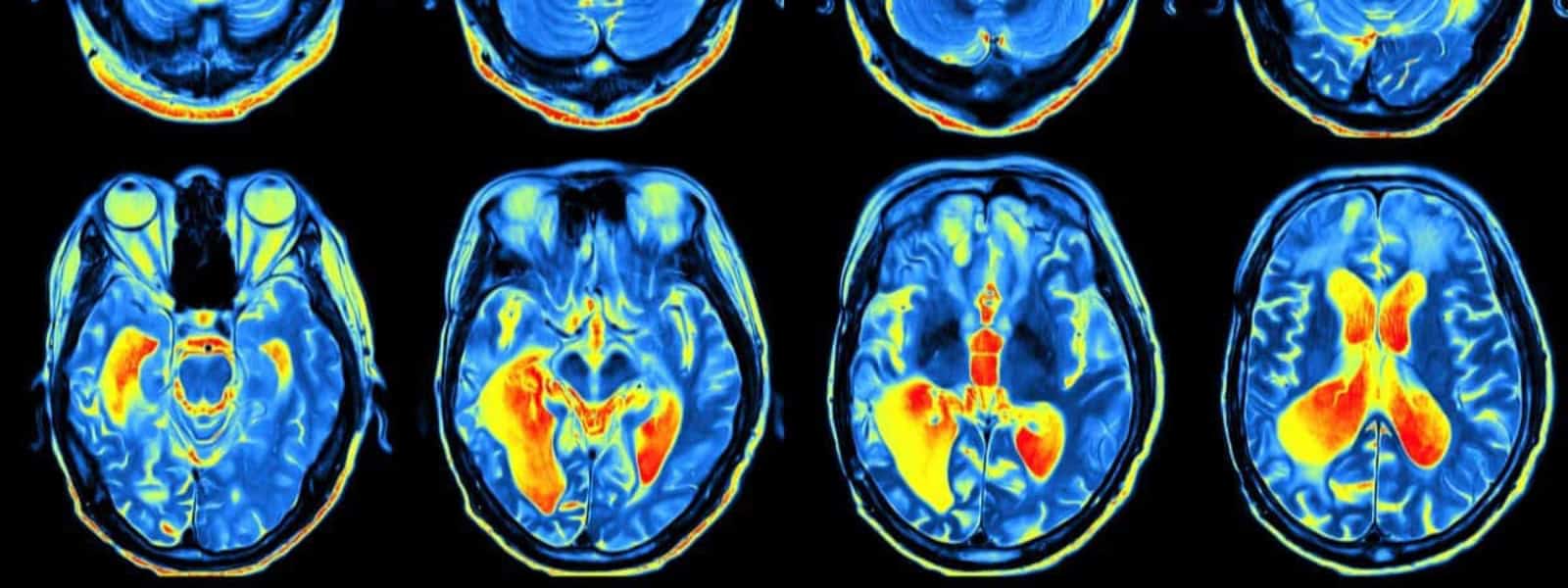
Find out more about taking part in our Brain Health Study pilot.
About the study
Why have you invited me to take part in the Brain Health Study?
Why have you invited me to take part in the Brain Health Study?
UK Biobank is running a new study about brain health. The aim of the study is to help researchers develop better ways to diagnose and treat brain health conditions like dementia and Parkinson’s disease.
We recently sent out a brain health survey to participants living close to our brain health research centre. The answers to our brain health survey show which participants are eligible to receive an invitation to the study.
Do I have to take part in this study?
Do I have to take part in this study?
No, you can choose if you want to be in this study or not.
If you are a current UK Biobank participant, your decision will not affect your ongoing relationship with UK Biobank.
If you have been asked to take part as a Study Partner, your decision will not affect the ability of your relative/friend to take part, nor their ongoing relationship with UK Biobank.
Do I get any results from the visit?
Do I get any results from the visit?
No, participants will not receive the results of the tests or a diagnosis. This is because the tests and brain scans collect research information and are not checked by a doctor.
However, we will contact participants and their GP if the radiographer doing the brain scan sees something abnormal and unexpected that may be medically important.
In another UK Biobank study, we found abnormal appearances in 1% of people scanned, and for half of these people, the abnormality turned out to be nothing to worry about.
Abnormalities might turn out to be something harmless like a cyst or a technical issue with the scan. It could also be related to a condition that participants and their GP already know about. However, other abnormalities might affect bodily functions, on quality of life, or lifespan.
In case it is something more serious, we will ask for permission to tell participants and their GP if we notice something on their scan.
Joining the study will not affect the care participants receive from your doctor.
What are the possible benefits of taking part?
What are the possible benefits of taking part?
There are no direct benefits to participants and their Study Partners, but the Brain Health study will help scientists better understand different types of brain health conditions. This could lead to simpler methods of diagnosis and better treatments for future generations.
Some participants may regard finding out about an abnormal appearance (if one is noticed during the scan) as a benefit. However, others may regard this as a risk if this abnormal appearance turns out to be nothing serious (because of the short-term anxiety this information may cause). Please see ‘Do I get any results from my visit?’ for more information.
What are the possible risks of taking part?
What are the possible risks of taking part?
Taking part in the Brain Health Study should not cause harm. We have chosen scans and tests that are safe, painless, relatively quick and comfortable.
The MRI scanner uses powerful magnets and we take great care to prevent magnetic objects from entering the MRI room. Before you enter the room, we will ask you some questions to confirm your suitability for doing so.
MRI scans involve lying flat in a slightly confined space and a small number of people may find this uncomfortable. However, the scanners we use in this assessment are wider (about 70 cm, or 27 inches in diameter) than those typically used in hospitals to help with this.
Some participants may feel some discomfort when they have blood taken, although our health research assistants are specially trained to minimise this.
We would not recommend that participants use the cardiac monitor if they have an allergy to any skin adhesives.
We take very seriously the health and safety of our participants and staff alike and put in place strict measures to ensure that our centres are safe. We routinely review our operational practices to minimise the risks to safety and to prevent the transmission of infections. To help with this, please do not attend your research centre appointment if you have an infection which might affect or be transmitted to those around you, for example a respiratory infection (such as COVID-19, a cold or influenza), vomiting and diarrhoea or shingles.
Who will be able to use my information and samples?
Who will be able to use my information and samples?
We will store information and samples from your visit (for example, scans, blood results and questionnaire answers) for many years. The information will be used by approved researchers for medical and other health-related research. This includes scientists working in other countries and in commercial companies.
We ask researchers to return their findings to us so they can be included in our database for other researchers to use. Scientists must also make the results of all research based on the resource publicly available so that everyone can benefit from it. You can find out about research that is being done using UK Biobank data.
We will never pass on any information that could identify you to insurance companies or employers. Also, we will not allow the police, security services, relatives or lawyers to access your information, unless we are forced to do so by the courts.
Who has reviewed the study?
Who has reviewed the study?
All the research conducted by UK Biobank is looked at by an independent group of people, called a Research Ethics Committee, to protect participants’ interests. This study has been reviewed and approved by the North West – Haydock Research Ethics Committee.
Study Partner
What is a Study Partner?
What is a Study Partner?
For this study, we would like you to choose a Study Partner to come with you to the research centre. Study Partners can be a member of your family or a friend who knows you well.
Is a Study Partner required?
Is a Study Partner required?
We would like you to bring a Study Partner with you to the research centre so that you have support during the research visit. With permission, Study Partners will also be asked some questions about your health and daily living. However, if you cannot choose a Study Partner and are willing and able to come to a research centre visit on your own, this is ok.
Before your visit
How will I get to the research centre?
How will I get to the research centre?
Our UK Biobank brain health research centre is in Stockport. You will only have been sent invitations to be involved if you live close to this research centre.
We want to make it as easy as possible for you to attend a research centre visit and to avoid incurring expense. We can arrange door-to-door transport for you and your Study Partner if that would be helpful. We will ask you about this when we book your appointment.
Can I claim travel expenses?
Can I claim travel expenses?
If you prefer to use your own car or travel to the research centre by public transport, we will provide directions and travel advice and will pay travel costs.
Train and other public transport (bus, tram, Metro or underground)
For train travel, please keep in mind the following:
- Please buy standard tickets (i.e. not first-class).
- Booking in advance usually means that you get the best value tickets. Where possible, please avoid booking open return tickets as these tend to be the most expensive.
- Buying split tickets may reduce the overall price of your fare.
Private transport (car, motorcycle or bicycle)
We will reimburse mileage to and from the research centre. Current mileage allowances can be found in our participant travel expense claim policy.
Car parking
There is free parking at the research centre. Other car parking costs can also be claimed (but not fines).
Tolls and tunnel fees
Any tolls and tunnel fees can be claimed.
How should I prepare for the research centre visit?
How should I prepare for the research centre visit?
Please be prepared to spend approximately three hours at the research centre. Here are some things to think about in advance:
- Bring your letter and the directions to the centre with you.
- Bring the name and address of your GP.
- Complete the pre-imaging visit questionnaire we sent you (and your Study Partner) and bring it with you.
- Bring any glasses that you may need for both long and short distances.
- If you wear hard contact lenses, please bring a pot and solution to store them as we will ask you to remove these during your MRI scan. Soft, non-tinted contact lenses can be worn during the MRI scan.
- Do not wear heavy make-up. You will be asked to remove this before having the MRI scan.
- Remove any jewellery that can be easily removed. You may be able to wear jewellery made from a precious metal if you cannot remove it, for example a gold wedding ring.
- Please ensure that your underwear does not contain metal fastenings or jewels.
- Wear clothing that you can change in and out of easily. A small locker will be provided for your clothing and personal items. We ask that you bring minimal belongings with you.
- Consider bringing thick socks or slippers to keep your feet warm, as you will need to remove your footwear for the MRI scan. We can provide disposable slippers.
- Do not attend your visit if you have an infection which might affect or be transmitted to those around you, for example a respiratory infection (such as COVID-19 or a cold), influenza or shingles.
Can I eat before my visit?
Can I eat before my visit?
Yes. There is no need to avoid eating beforehand. Sandwiches, tea and coffee will be available during the visit. Please tell us in advance if you have special dietary requirements by calling the number below.
If your appointment is at lunchtime, please consider eating before you arrive. You will need to be ready to begin your assessments at your visit time.
At your visit
What will happen during this clinic visit?
What will happen during this clinic visit?
The visit will take approximately 3 hours. You will be asked to do the following:
Memory tests and questionnaires
Some of these have been used in UK Biobank centres before, and some are new. These tests will help researchers understand how your brain works. Some of the areas that these tests cover include:
- how well you remember new information
- your planning and problem-solving abilities
- how you deal with complex tasks
You will also be asked about your feelings and thoughts over the past two weeks.
Blood sample
A blood sample (25.5 ml, about 0.9 oz) will be taken which will be stored and analysed in the future.
Brain MRI (magnetic resonance imaging) scan
The MRI scan will take around 30 minutes. This scan will provide researchers with detailed images of your brain structure and function. You can read more about having an MRI.
Smell identification test (B-SIT smell test)
This test is a ‘scratch and sniff’ test which includes twelve different odours. A member of the research team will ask you to scratch the test panel and then match it to an odour from four different options.
Remote devices – Cardiac monitor
You will be offered a chest-worn device to wear home, which will collect additional data from you whilst you are going about your daily life. This device will be worn continuously for seven days, including during bathing and sleeping, to provide us with data about heart rhythm and activity.
Remote devices – Sleep mat
You will also be offered a small sleep mat (about 2 feet long by 7 inches wide) to place under your mattress at home to monitor your sleep for fourteen days.
Do I need to have all the tests and scans?
Do I need to have all the tests and scans?
We would like you to complete all the tests and scans if possible. This helps us get a complete picture of every participant who takes part. However, we understand that some participants may find some of the activities difficult. Please tell us at the start of the visit if you think you will not be able to do any of the activities. You can change your mind at any point during the visit.
What if I am unable to use a touchscreen device?
What if I am unable to use a touchscreen device?
We understand that completing some of the questionnaires and tests on a touchscreen device will not be appropriate for everyone. If that is the case, you will be able to skip those tests.
What if I need help with the questionnaires or cognitive tests?
What if I need help with the questionnaires or cognitive tests?
We would like you to answer the questionnaires and cognitive tests yourself, but a member of staff will be available to answer any questions that you may have.
What is an MRI scan?
What is an MRI scan?
A magnetic resonance imaging (MRI) scan uses painless magnetic fields to take detailed pictures of the inside of the body (such as organs, tissues and bones). For this study we are interested in taking brain scans so that we can collate information about the structure and function of the brain; for example, which parts of the brain are important for carrying out certain tasks and how different parts of the brain are connected.
Some UK Biobank participants will already have had an MRI scan for UK Biobank as part of our Imaging Study, or as part of their clinical care.
The MRI scanner is a large cylinder with a tube running through the middle which is open at both ends.
A helmet-like covering allows a close detailed examination of the brain. A mirror allows participants to see out of the scanner.
You will lie flat on your back (with your legs supported) on a comfortably padded table that gently glides you into the scanning tube.
The MRI scanner is controlled by a computer which is in an adjacent room. A specially trained radiographer will operate the MRI scanner. They will be watching through a window throughout the scan, and you will be able to talk to them through an intercom.
MRI scanners are noisy and can vibrate (or judder) a bit. Earplugs will be given to protect your hearing, although most people will still hear quite a lot of noise. This is entirely normal and safe.
You will have a hand-held buzzer so that you can alert staff if you have an issue or would like to stop the process at any time.
Why are you including a smell test?
Why are you including a smell test?
Our senses are linked to brain health, and problems with sense of smell may help to predict certain conditions.
What if I have no sense of smell?
What if I have no sense of smell?
If you have permanent partial or full loss of smell (anosmia), please let us know and we will not ask you to do the smell test.
What if I take one of the wearable devices home but decide that I do not want to use it?
What if I take one of the wearable devices home but decide that I do not want to use it?
You are allowed to change your mind at any time during the study. Please follow the instructions provided to return the device to us using the pre-paid postage packet.
What if I take one of the wearable devices home but decide after a couple of days that that I do not want to use it for the full seven or fourteen days?
What if I take one of the wearable devices home but decide after a couple of days that that I do not want to use it for the full seven or fourteen days?
We understand that you may want to stop using the take home device at any time and for any reason. If you would like to stop using the device, please check the supplied instructions for removing and shutting the device down. Then please follow the instructions provided to return the device to us using the pre-paid postage packet.
I took the monitor off as it was uncomfortable, and I cannot remember where I put it. What should I do?
I took the monitor off as it was uncomfortable, and I cannot remember where I put it. What should I do?
Please do not worry. Please contact the Participant Resource Centre so we can update our records.
Explore more information for participants

This Privacy Notice explains to our participants how we collect, share and use the personal information which forms the UK Biobank resource.